01 / Arrival
The longer way is the way.
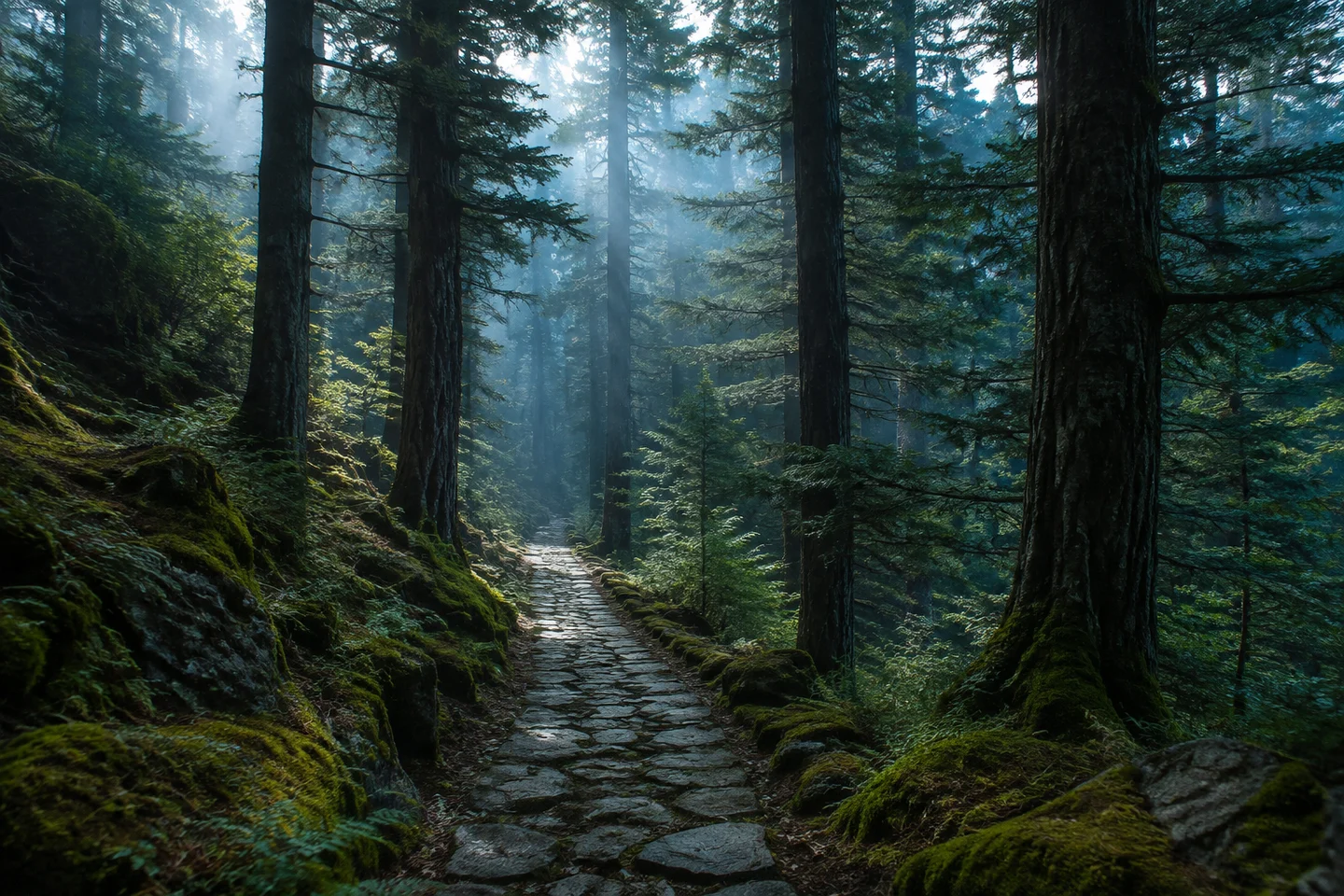
Follow a stone path beyond the familiar. Highland Passage is an imagined journey through mountains, courtyards and the spaces in between.
Design Study 003
Three.js · Scroll Story · World Building
01 / Arrival
Follow a stone path beyond the familiar. Highland Passage is an imagined journey through mountains, courtyards and the spaces in between.
An imagined mountain world in five distinct chapters: an arrival, a heritage essay, a moving landscape collection, an interactive field guide and a closing overlook. A live Three.js camera follows the journey, with typography and scenery sharing one smoothed scroll timeline.
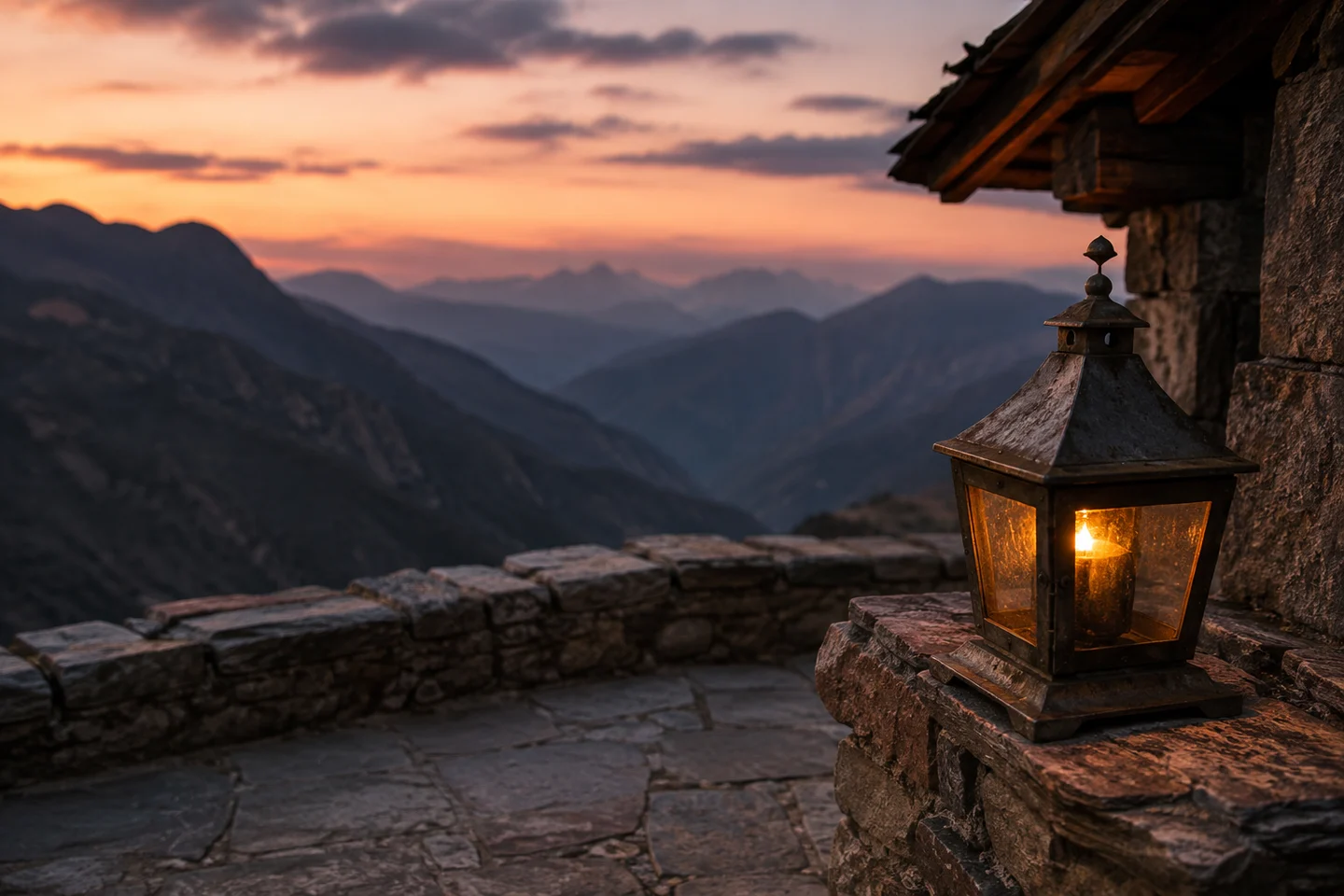
A quiet blue-hour world lit by ivory moonlight and warm monastery windows. The opening gives way to an essay, a panoramic collection and a field guide instead of repeating the same text layout. Highland Passage is a fictional mountain setting, not a reconstruction of a specific place or a tourism service.
Use the creative brief and starting prompt as a foundation for your own exploration.
The finished study brings together art direction, iteration, interaction design, motion and frontend implementation. The prompt is a starting point.
Create a cinematic, editorial digital hero that feels more like a brand world than a conventional software landing page.
Editorial hierarchy. Cinematic imagery. Restrained UI. Strong negative space. Controlled motion. Premium typography. High visual impact.
Generic SaaS composition, AI clichés, overuse of gradients, decorative HUD graphics, excessive copy and unnecessary glassmorphism.
Build Highland Passage, an original fictional mountain journey with Three.js and React. Write original code and use original assets.

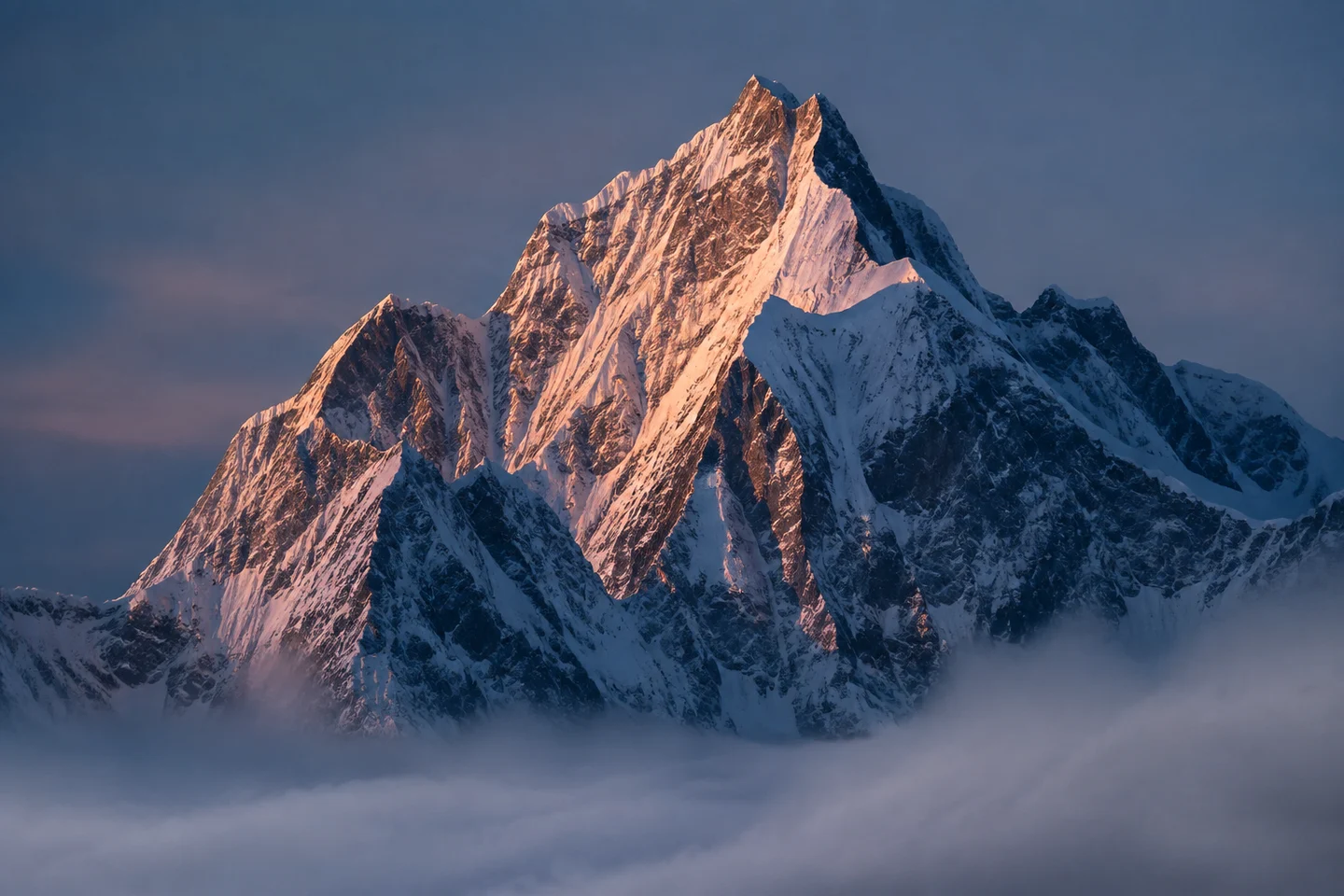
Art direction: blue-hour Himalayan peaks, pale moonlight, quiet amber windows, maroon timber and warm stone. Model an imagined Himalayan monastery with layered plaster walls, gold roof edges, timber windows, a rising stair, chortens, prayer-wheel galleries, lamps and pine forest. Use a generated mountain backdrop for distant detail. Keep the primary scene live WebGL, not a video or iframe.

Scroll choreography: use native document scrolling and a sticky viewport over approximately six screen heights. Move camera position and its look target along separate original Catmull–Rom curves. Five views: distant arrival, centered approach, left courtyard, right-hand discovery, elevated return. Smooth small scroll steps but keep the scene responsive and reversible. Add restrained pointer parallax only for mouse input.

Use the Highland Passage name and five chapters: Arrival, Heritage, Stories, Field guide, Return. Opening copy: "The longer way is the way." Give Heritage an essay and collection link; Stories a three-panel landscape collection that moves with the scroll; Field guide four real navigation actions; Return a closing invitation and replay action. Synchronize the camera and typography through one frame-rate-independent progress value, and sample the camera path at uniform distance. Include keyboard-accessible chapter buttons, an atmosphere pause toggle and progress indication. Connect the final project CTA to Vertical Labs Contact.

Render repeated architecture and trees with instanced meshes. Animate original cloth vertices on the GPU. Cap pixel ratio on mobile; avoid expensive post-processing. Pause rendering while offscreen and in hidden tabs; dispose every geometry, material, observer, event listener and frame callback when leaving the route. If WebGL is unavailable, keep the mountain art and all chapter navigation usable. Reduced motion keeps the camera still and changes narrative chapters without transitions. Scope every style and ship all assets with the site.
Vertical Labs turns concepts into production-ready digital products.